What our concrete driveway contractors in Spring Hill cover, from tear-out to the apron
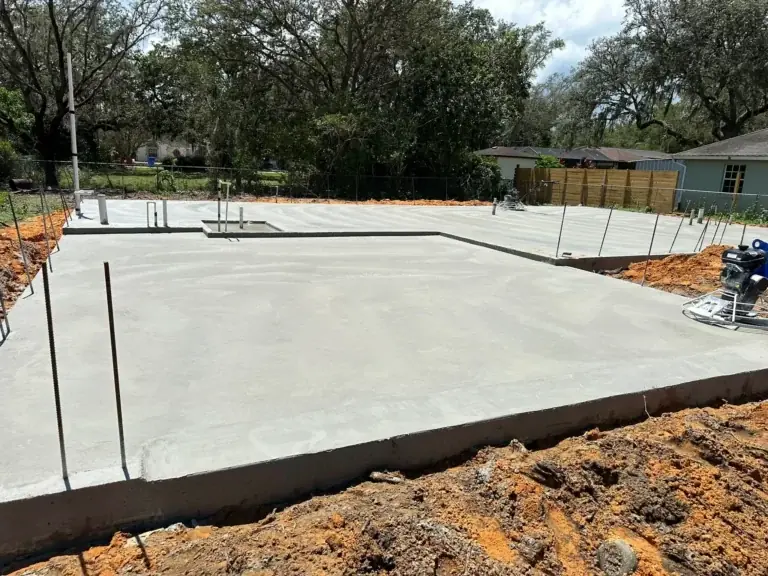
The job here starts with an old slab. Spring Hill grew out of the Deltona Unit plats, and the median home on those lots went up in 1987, so the pour out front can be as old as the house: cracked across the middle, lifted by a tree, or sunk where the base washed out. We break it out, haul it off, regrade and compact the sand, then set forms and have the ready-mix truck deliver straight to them for a new slab from the garage to the road.
Not every job is a full replacement. We also pour widening strips beside the old slab, parking pads for a boat or a second truck, and the apron where it meets the street. The walk from the garage to the front door is its own job on our concrete sidewalk and walkway page. If the old slab is sound and only the surface is tired, read about repair and resurfacing before you pay for a tear-out.
Thickness, steel and joints for cars, pickups and boat trailers
Concrete Network recommends 4 inches as the minimum for a home, and, citing the Tennessee Concrete Association, puts numbers on the next step up: going from 4 to 5 inches adds roughly 20% to the material cost but raises load capacity by nearly 50%. As concrete driveway contractors in Spring Hill, we ask what will sit on the slab. Two sedans, 4 inches. A loaded pickup, a camper or a boat trailer that parks on the same strip every night, 5 inches is money well spent.
Steel follows thickness. Wire mesh suits a 4 to 5 inch slab; at 5 inches and thicker, #4 rebar on about a 12 inch grid is the usual call. Synthetic fibers help with early shrinkage cracks, and NRMCA says plainly they don't replace structural steel or let you thin the slab.
Joints decide where the slab cracks. On a 4 inch slab, control joints go no more than 10 feet apart and are cut a quarter of the slab depth, about 1 inch. Isolation joints go where the pour meets the garage slab, a sidewalk or the street apron, so each piece can move on its own. You can read the full spec list in Concrete Network's driveway basics.
As concrete driveway contractors in Spring Hill, our range is $8 to $14 per sq ft for 4 inch broom-finish concrete. A typical two-car driveway of about 500 to 700 sq ft runs $4,000 to $9,800.
| Job | Per sq ft | Typical project | What moves the price |
|---|---|---|---|
| Two-car driveway, 4 in. broom finish | $8 to $14 | $4,000 to $9,800 | Tear-out of the old slab, base repair, distance from the truck |
| Single-car driveway, 12 by 40 ft | $8 to $14 | 480 sq ft: $3,840 to $6,720 | Apron length, joints, finish |
| Widening strip or parking pad, 8 by 36 ft | $8 to $14 | 288 sq ft: $2,304 to $4,032 | Doweling into the old slab, HOA or city limits on width |
| County or city apron (6 in. in the right of way) | Priced on site | Written after the visit | Road edge, culvert, inspection steps |
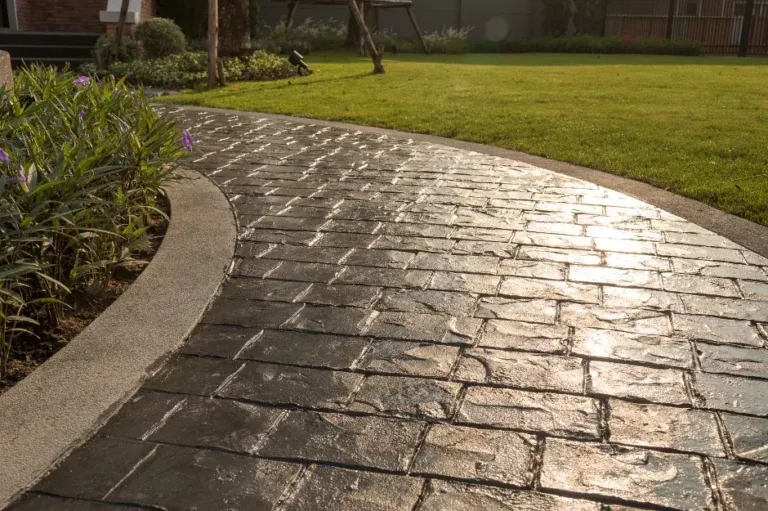
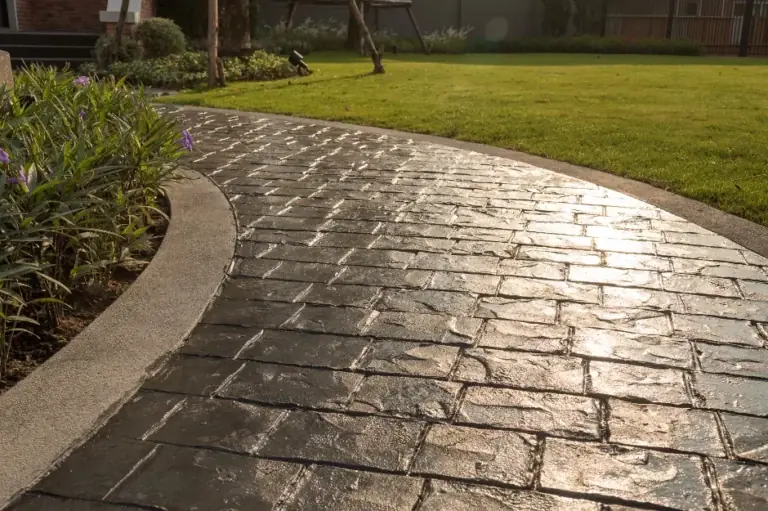
| Stamped or colored driveway | $12 to $22 | Priced on site | Pattern, color layers, sealer |
Permit fees, the Public Works or connection permit and any HOA review step are listed on their own lines. These are ranges, not a quote: you get a free written estimate after we see the site, and a detailed written quote before any work begins, with transparent pricing and no hidden fees. The driveway cost guide breaks the numbers down further.