Spring Hill's #1 Rated Concrete Contractor  |  Call Now: (727) 877-3099
📞 (727) 877-3099
★★★★★ 4.7 Google Rating
Fully Insured
Free Quotes
Locally Owned — Decades of Experience
Homeowner Guide

Stamped Concrete Driveway: Style and Durability

Pattern and color choices, the slab spec for cars, and what upkeep and cost look like in Spring Hill.

Free Quotes
Fully Insured
4.7-Star Rated

Quick answer

A stamped concrete driveway in Spring Hill is a 4 to 5 inch slab with a pattern pressed in while the concrete is wet, then colored and sealed. Ours run $12 to $22 per sq ft, so a 480 sq ft driveway is $5,760 to $10,560, with a free written estimate after we see the site.

Is a stamped concrete driveway the right call for your house?

A stamped concrete driveway earns its price when the front of the house is what you want people to notice. You get the look of slate, flagstone, brick or cobblestone in one slab, and it suits a home where a plain gray strip out front undercuts a good facade. If the driveway is mostly a place to park a work truck, a broom finish at $8 to $14 per sq ft does the same job for less, and our concrete driveway page covers that option.

This guide sticks to the driveway: pattern and color for a surface cars cross every day, the slab spec behind the pattern, how it holds up in Florida weather, upkeep and the cost math. The whole stamped service, patios and walks included, is on our stamped concrete page. Weighing it against pavers? The stamped concrete vs pavers guide makes that comparison.

Choosing a pattern that works at driveway scale

A pattern that looks right on a 12 by 16 patio can look busy across 40 feet of slab. Large-format stones such as ashlar slate and flagstone look calm at a distance, because the eye sees broad shapes, not a repeat. Small cobblestone packs in a lot of lines, so it suits a short run or a border.

A border is the low-cost way to make the entry look designed. Run a band of cobblestone or a single row of running-bond brick along the edge, with a field of slate inside, and it frames the slab and hides the point where one pour section meets the next. A second border where the slab meets the garage apron gives the entry some weight.

Direction matters too. Lay the pattern so the main joint lines lead toward the garage, and set any border corners square to the house, not to the street. During the visit we sketch a few options over your driveway, so you're not choosing from a catalog photo.

A stamped driveway is $12 to $22 per sq ft. The sizes below show the range for common layouts.

Driveway layoutPer sq ftTypical projectWhat moves the price
Single-car, 12 by 40 ft (480 sq ft)$12 to $22$5,760 to $10,560Pattern, colors, tear-out
Double-wide, 20 by 24 ft (480 sq ft)$12 to $22$5,760 to $10,560Borders, thickness, apron work
Wide driveway, 600 sq ft$12 to $22$7,200 to $13,200Joint layout, turning space
Large driveway, about 650 sq ft$12 to $22$7,800 to $14,300Access for the truck, base repair
Plain broom finish, 480 sq ft (for comparison)$8 to $14$3,840 to $6,720Finish and tear-out only

These are ranges, not a quote. You get a free written estimate after we see the site, plus a detailed written quote before any work begins. See the stamped concrete page for patios and walks.

Color on a driveway: base tone, accent and the oil-drip test

Driveway color has a job a patio color doesn't. It has to look right after a year of tires, drips and sprinklers. Concrete Network notes that stamped concrete contractors often combine integral or dry-shake color with surface-applied coloring. On a driveway we usually keep the base color in the mid-tones and put the contrast in the accent coat. A medium warm gray or tan hides dust and tire marks better than a near-white or a charcoal.

Do an oil-drip test before you sign. Ask where the parked cars will sit, then ask what a drip on that spot will look like on your color after a season. Sealer type and sheen change the answer. Concrete Network warns that film-forming sealers can leave a textured surface slippery when wet, so on a sloped driveway we raise the grip additive.

The slab behind the pattern: thickness, steel and joint layout

The stamp is only surface. The slab and the base under it carry the car. Concrete Network recommends a minimum residential driveway thickness of 4 inches, and it cites the Tennessee Concrete Association for the step from 4 to 5 inches: roughly 20% more concrete cost for nearly 50% more load capacity. If your stamped concrete driveway takes a loaded pickup, a camper or a boat trailer, we price the 5 inch option beside the 4 inch one, so you see the difference on paper.

For reinforcement, the same source points to wire mesh for 4 to 5 inch driveways and #4 rebar on a 12 inch grid for 5 inches and thicker. Synthetic fibers reduce shrinkage cracks but are not structural reinforcement. NRMCA's CIP 24 puts typical fiber dosage at 1 to 2 pounds per cubic yard and says fibers add impact resistance but should not be used to thin the slab, stretch joint spacing or replace structural steel. We tell you which one goes in, because steel and fiber are two different line items.

Joints on a stamped slab pull double duty. Concrete Network puts control joints for a 4 inch driveway no more than 10 feet apart and cut to one-fourth the slab depth, with isolation joints where the driveway meets a garage slab, sidewalk or other pavement. We lay the joint plan over the pattern first, so a cut lands in a grout line wherever it can and the crack control doesn't interrupt the design.
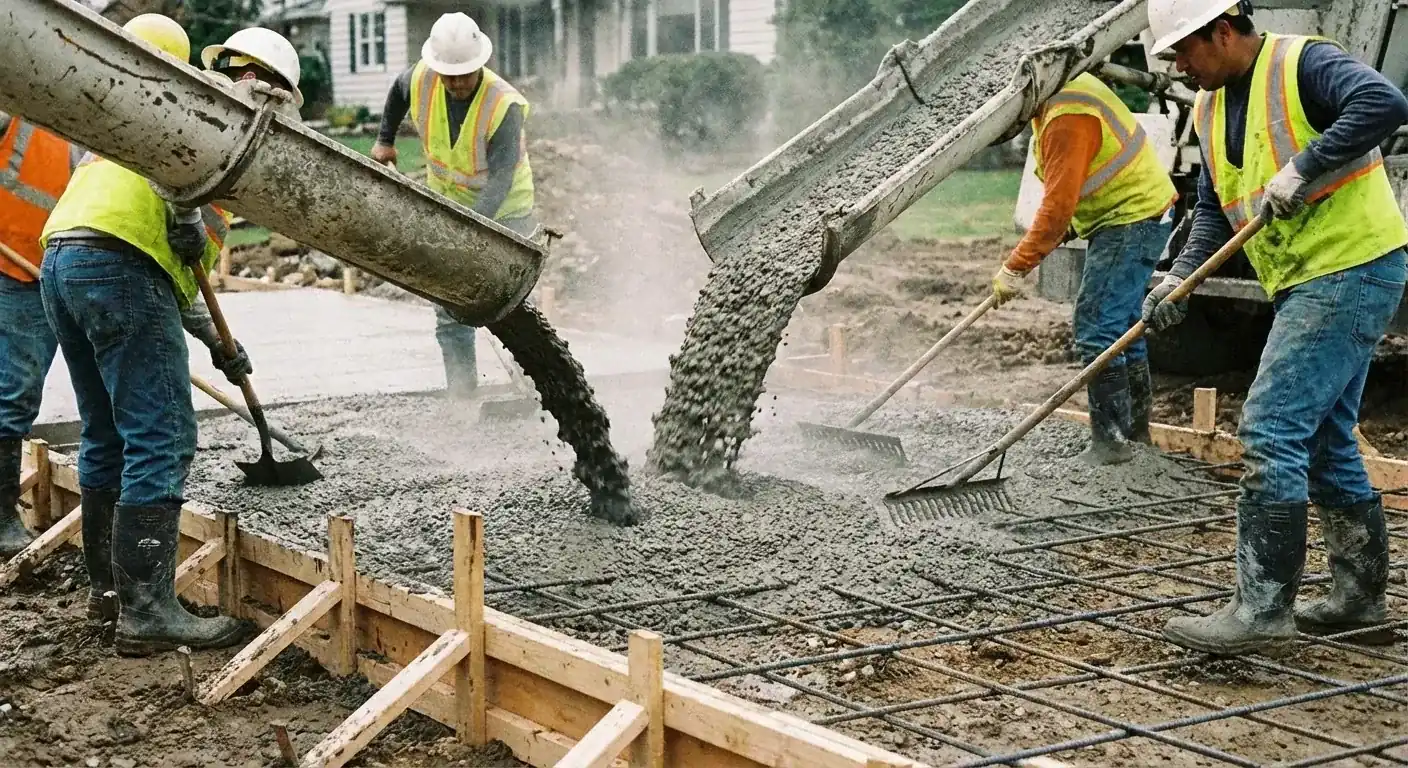
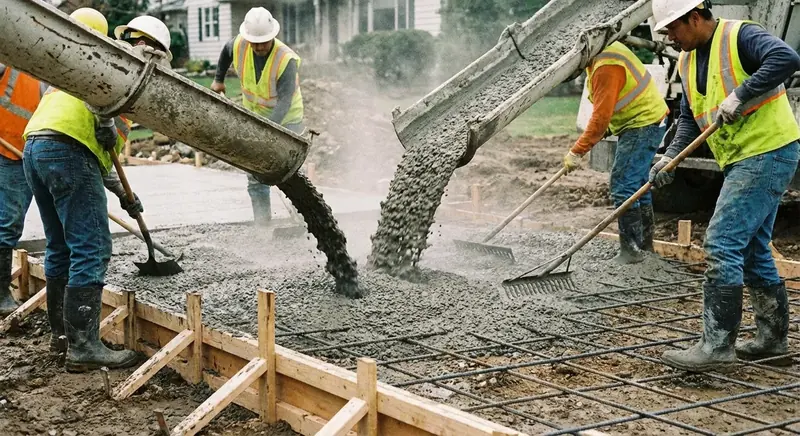
Chute pouring concrete into a rebar mat inside driveway forms, Spring Hill, FL

How a stamped concrete driveway handles Florida sun, rain and sprinklers

On a stamped concrete driveway the sealer is the wear layer. Concrete Network notes that sealers help block water, stains, dirt and chemicals, and that faded color can often be brought back by cleaning and resealing. It says stamped concrete typically needs cleaning and resealing every 2 to 3 years on average, depending on traffic, chemicals and weather, so plan the reseal around how hard your driveway gets used, not a fixed date.

Point the sprinkler heads away from the slab. Turning a head costs nothing, and the slab stays drier.

Settling is the other durability question. The Florida Geological Survey lists decomposing stumps, improperly compacted soil after excavation and buried debris among the causes of ground settling that can look like a sinkhole. So we dig out soft spots, pull roots and stumps in the footprint, and compact the base before forms go in.

We plan the pour around the weather: an early start, since NRMCA advises avoiding the hottest part of the day, and a look at the radar the night before.

Cost math for a stamped concrete driveway

Stamped and decorative work is $12 to $22 per sq ft, and that includes pattern, color and sealer. Here are some worked examples. A single-car driveway 12 by 40 feet is 480 sq ft, so it runs $5,760 to $10,560. A 20 by 24 foot double driveway is also 480 sq ft, so the same range applies. A wider 600 sq ft driveway is $7,200 to $13,200, and a 650 sq ft layout with turning space lands at $7,800 to $14,300.

Compare that with a plain broom-finish driveway at $8 to $14 per sq ft: 480 sq ft is $3,840 to $6,720. The gap is the pattern, the color layers and the sealer. You can narrow it by stamping only a border and the apron end of the driveway and leaving the field broom-finished.

A few things move a stamped number inside the range: how busy the pattern is, the number of colors, borders, tear-out of the old driveway, base repair, apron work and how far the truck has to reach. Permit lines are listed separately. Hernando County's building fee list shows a "Driveway Slab (From House to ROW)" permit at $140 plus surcharges, and the Pasco County base fee is $45 per permit. Every number on this page is a range, not a quote. You get a free written estimate after we see the site, with transparent pricing and no hidden fees. Plain driveways are broken down in the driveway cost guide.

Apron, right of way and permits before the stamps go in

The apron is the strip from the street edge to your property line, and it follows the county's rules, not your design. In Hernando County, work in the right of way needs prior approval from Public Works, and the county's residential connection detail calls for an apron of at least 6 inches of 3,000 psi concrete with wire or fiber mesh, 12 feet wide at minimum, with 3-foot tapers on each side. Pasco County's driveway connection permit sets 12 to 24 feet with 3-foot flared ends. Inside New Port Richey, the right-of-way portion must be 6 inches of concrete, the driveway needs a 3-foot setback from side and rear lines, and total impervious coverage cannot pass 60 percent of the lot.

The approving office decides whether a pattern or color is allowed in that strip, so we ask first. A driveway that connects to a state road, such as US-19, also needs an FDOT connection permit on top of the local one. Our Hernando and Pasco permit guide covers the offices and steps. If you live under an HOA, such as in Timber Pines, Florida law lets the association review appearance only as far as its declaration or published guidelines allow, so a color and pattern sample goes to them before the pour date is set.

Pour day for a stamped concrete driveway: the 811 call, heat and rain

The work starts before any truck rolls. A hired excavator has to notify Sunshine 811 at least 2 full business days before digging, and the locate stays valid for 30 calendar days. The owner exemption for digging up to 10 inches does not cover a contractor, so the call comes first, then the dig.

After that, the weather picks the date. Brooksville's 1991 to 2020 normals show about 89 days a year at or above 90 degrees, and about 30 of the year's 51.94 inches of rain fall from June through September. At the Brooksville Chin Hill weather station, November is the driest month at 1.83 inches. A pressed pattern can't be rushed when a storm cell builds, so we watch the radar and move the pour.

NRMCA defines hot weather as any mix of high air temperature, high concrete temperature, low humidity, wind and sun that can harm fresh or hardened concrete, and says those conditions can show up any time of year in a tropical climate. Its practices are plain: avoid the hottest part of the day when you can, keep jobsite water out of the mix beyond the design amount, never sprinkle water on the surface to help finishing, and dampen the subgrade and forms without letting water pond. So we start early on a pour like this one.

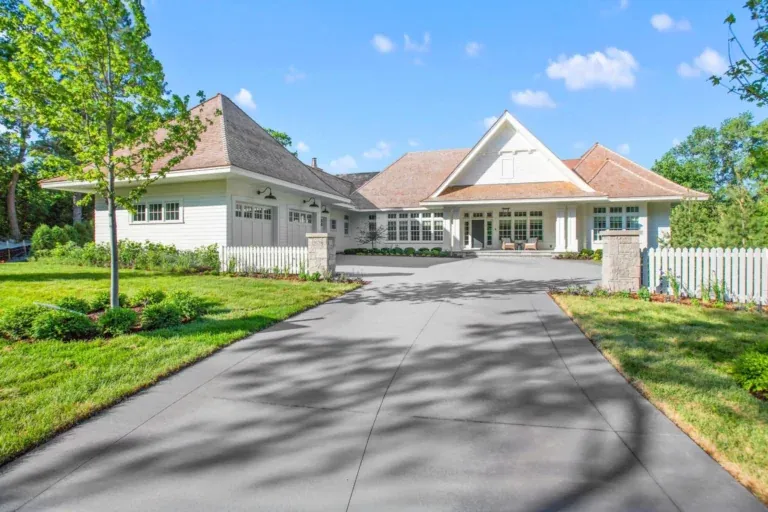
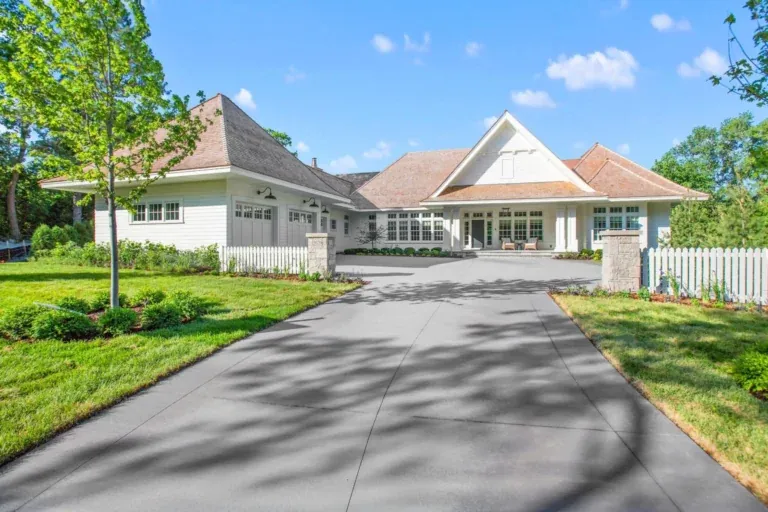
Long concrete driveway lined with lawn leading to a white home, Spring Hill, FL

Base prep, old slabs and oak roots before the forms go in

The ground does more for the finished look than the stamp does. USDA's survey for Hernando County lists Candler fine sand as the most extensive soil, about 90,195 of roughly 320,600 acres, or 28 percent, and classes it as an excessively drained deep sand. Sand drains fast but won't hold a shape, so the base gets compacted evenly before anything is formed.

In Spring Hill the slab you are replacing may be an original. About 15,300 of the community's 43,870 single-family homes date from the 1980s, and a typical original lot is about a quarter acre. Breaking out that old strip and hauling it off is its own line on the estimate, and we tell you how thick it is once we see it. A stamped concrete driveway goes over a fresh, compacted base, not over the old slab.

Trees come next. UF/IFAS says live oaks planted too close to curbs, sidewalks or driveways can grow roots big enough to lift and crack them, and that a live oak reaches 60 to 80 feet tall and 60 to 120 feet wide. If a big oak shades your front yard, we look at where its roots run before the layout is final, and we can pull the edge of the slab back from the trunk.

The first week: cure time and when the car goes back on

Concrete Network says to let a new driveway cure at least a week before anything heavy goes on it, and that skipping the cure right after finishing can cut strength by up to 50 percent. Curing can mean plastic sheeting, wet coverings, sprinkling or a liquid curing compound. NRMCA's CIP 11 adds that curing should start right after finishing and typically continues 3 to 7 days, and that concrete left to dry out can lose as much as 50 percent of its potential strength compared with moist-cured concrete.

Keep cars, bikes, wheelbarrows, sprinklers and trailers off for the whole week and park on the street. We tell you the day the first car can pull in, and the sealer type goes on your estimate for later resealing.

Questions to ask before you sign a stamped concrete driveway quote

Two quotes can look alike and price different jobs. Put these questions to every bidder, us included:

  • Thickness. 4 inches or 5, and whether the apron is thicker.
  • Steel. Mesh, rebar or fiber, and on what grid.
  • Joints. Where the cuts land against the pattern.
  • Color. Integral or dry-shake base color, with surface coloring on top.
  • Sealer. The type, the sheen, the grip additive and the reseal schedule.
  • Apron. Who files with Public Works or Pasco, and who pays.
  • Old slab. Tear-out, haul-off and base repair as separate lines.
  • Approvals. The HOA sample and the permit step, settled before the pour date.

A quote that answers all eight can be compared line by line. Ours does, in a detailed written quote before any work begins.

Keeping a stamped concrete driveway looking new

Upkeep on a stamped concrete driveway is mostly sweeping, rinsing and a fresh coat of sealer on a schedule. Concrete Network says a garden hose or pressure washer, mild detergent and a push broom are all a stamped surface needs before resealing, and that oil, grease and other spills should come off right away. Before you pressure-wash and reseal, check Hernando County's current water-shortage notice, since a Phase III declaration has restricted aesthetic pressure washing of homes.

Resealing is every 2 to 3 years on average. The old sealer has to be clean and dry first, and the grip additive goes back in when the driveway is sloped or shaded. We note the sealer type on your estimate so whoever reseals it later uses a compatible product.

Small cracks and chips can be patched and tinted, though a repair never matches the surrounding color exactly. For a slab that has moved, see repair and resurfacing. If you want a pattern at the walk or the garden entry, see sidewalks and walkways.

Sources

  1. Stamped Concrete, Concrete Network
  2. Concrete Driveway Basics, Concrete Network
  3. Building Fee Resolution No. 2026-037 and Schedule, Hernando County Board of County Commissioners
  4. Right of Way Use Permit, Hernando County Public Works
  5. Engineering Facility Design Guidelines & Requirements (2026), Hernando County Public Works Engineering
  6. Driveway Connection Permit, Pasco County Building Construction Services
  7. Residential Driveway Requirements & Worksheet, City of New Port Richey Development Department
  8. Hernando County Is Now in a Modified Phase III 'Extreme' Water Shortage, Hernando County Board of County Commissioners
  9. CIP 11 - Curing In-Place Concrete, National Ready Mixed Concrete Association
  10. CIP 12 - Hot Weather Concreting, National Ready Mixed Concrete Association
  11. CIP 24 - Synthetic Fibers for Concrete, National Ready Mixed Concrete Association
  12. U.S. Climate Normals 1991-2020, Brooksville Chin Hill, NOAA National Centers for Environmental Information
  13. F.S. 556.105 Procedures (2026), Florida Legislature (Online Sunshine)
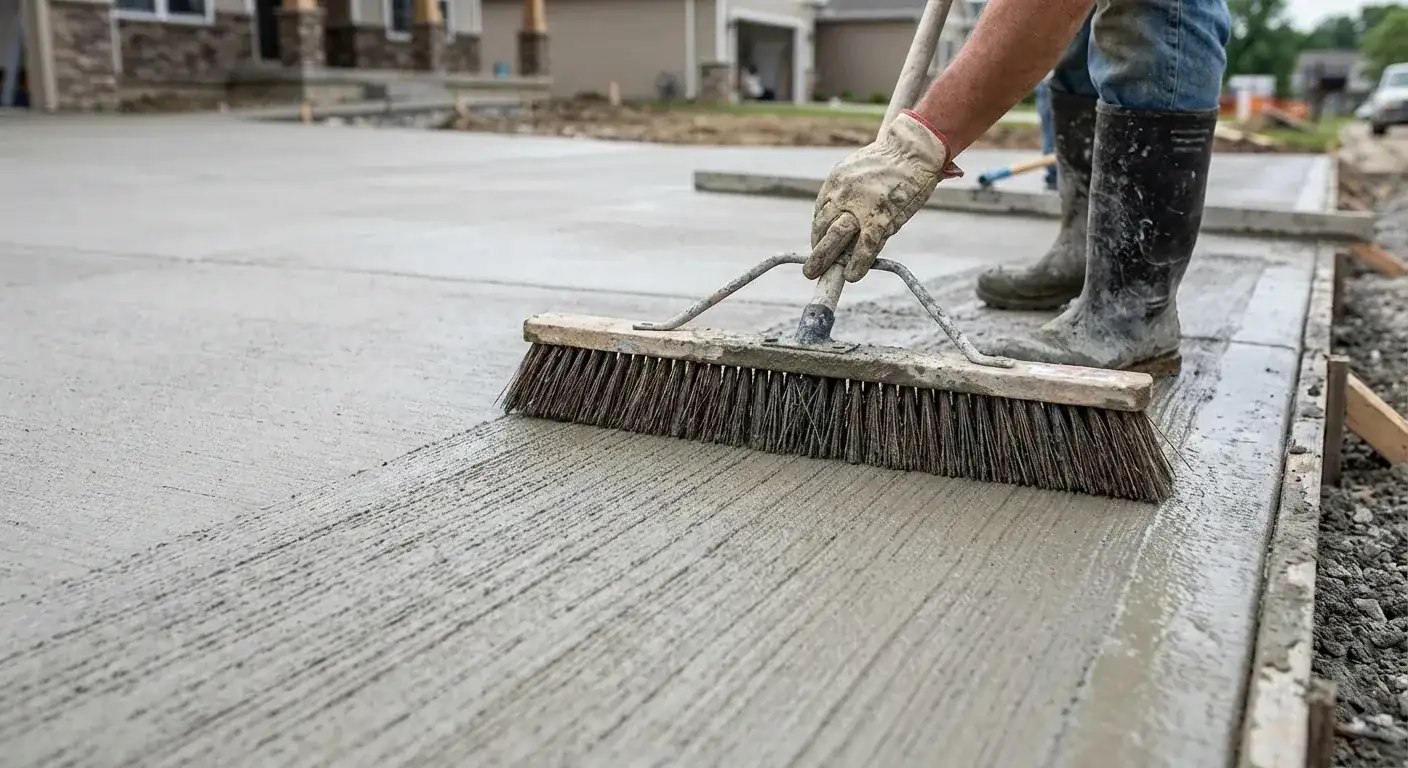
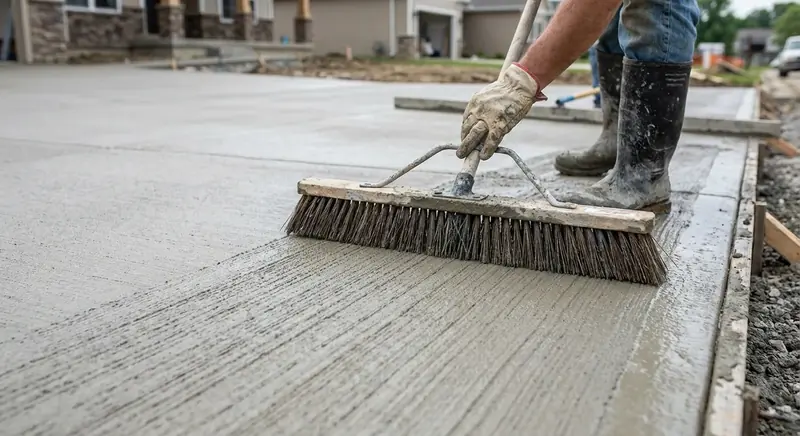
Finisher pulling a broom across fresh concrete for a slip resistant texture, Spring Hill, FL

Recent Stamped Driveway Projects

See the quality of our concrete work across Pasco and Hernando Counties.

What Our Clients Say

4.7 out of 5 from 15 Google reviews See all reviews on Google

  • Excellent work. On time and honest. Thank you Geno!
    Andrew · Google review · Oct 2026
  • Small back patio off the slider door. Crew was in and out in a day, left the site clean. No drama.
    Rochea · Google review · Oct 2026
  • Front walkway and the apron at the street. Walkway has a slight curve to it which I was nervous about but they got it right on the first pour. Solid work, no waviness in the edge
    Abdullahi · Google review · Oct 2026
  • people slow down to look at our patio now lol. its a big stamped one off the lanai, went with a charcoal cobblestone pattern. crew poured it in the right order so nothing got tracked and the lines match up perfect. best concrete company in Spring Hill hands down
    John · Google review · Sep 2026
  • I hired Spring Hill Concrete Co. for a driveway project, and the results exceeded my expectations. Their team was professional, punctual, and paid close attention to every detail from start to finish. The driveway looks fantastic and has definitely added value to my home. If you’re in Spring Hill and need reliable concrete contractors, I can’t recommend Spring Hill Concrete Co. enough!
    Tracy · Google review · Aug 2024
  • Amazing company the owners was honest and respectful and the driveway came out beautifully!
    Kently · Google review · Aug 2024
  • very fine work, professional company
    Marie · Google review · Aug 2024
  • I'm thrilled with my new patio. I'm so happy I decided to go concrete with it. What a difference it makes. The owner and his whole team were punctual and all around professional making the whole experience perfect, and the quality was incredible. They kept the area safe and clean. There's really nothing more I could have asked for and I'm so glad I went the way I did.
    Dack · Google review · Aug 2024
  • They were affordable and professional.Did good work.
    Daniel · Google review · Aug 2024
  • Spring Hill Concrete Co. transformed my house with a beautiful concrete driveway. The owner was clearly very experienced, the team was friendly, efficient, and had great attention to detail. I was impressed by their commitment to delivering exactly what I envisioned and they communicated well. Will use their services again!
    Coming · Google review · Aug 2024
  • Superb quality for a reasonable price. We had Spring Hill Concrete Co. remove our old driveway and install a new one along with some sidewalks. The owner made great suggestions to improve the utility of our new driveway, resulting in an outstanding outcome. The team was very professional and completed the job in a timely fashion. Their attention to detail and craftsmanship were impressive, and they were always on time. I highly recommend Spring Hill Concrete Co. for any concrete work you need. Thank you for a job well done!
    Trev · Google review · Jul 2024
  • I need a new back patio and it came out right away to give me an estimate highly recommended
    Jeremy · Google review · Jul 2024

Frequently Asked Questions

How much does a stamped concrete driveway cost per square foot in Spring Hill?
Our stamped range is $12 to $22 per sq ft, and that covers pattern, color and sealer. A 480 sq ft driveway is $5,760 to $10,560. Tear-out of an old slab, base repair, apron work and permit fees are listed on their own lines, and you get a free written estimate after we see the site.
How thick should a stamped driveway be?
Four inches is the minimum Concrete Network recommends for a residential driveway. Going to 5 inches adds roughly 20% to concrete cost and raises load capacity nearly 50%. If a loaded pickup, camper or boat trailer parks on it, we price both options. In a Hernando County right of way, the apron detail calls for at least 6 inches regardless.
Which stamped patterns suit a driveway?
Large-format slate, flagstone and ashlar read calm over a long driveway. Cobblestone and brick suit a border or a short driveway. Match the pattern to the house: stone against stucco, brick against painted block. We sketch two or three layouts over your driveway during the visit.
Can a stamped driveway handle a truck, RV or boat trailer?
Yes, when the slab is built for it. Thickness, steel and base matter more than the pattern. Tell us what parks on the driveway and where. We'll price the 5 inch option with rebar or mesh beside the 4 inch one, so you can see what the extra load capacity costs.
Will a stamped driveway crack, and can it be repaired?
Any concrete can crack. Control joints on a 4 inch driveway go no more than 10 feet apart and are cut to one-fourth the slab depth, per Concrete Network, and we lay them along pattern lines. A crack can be patched and tinted, but a repair does not match the original color exactly.
Can the stamped pattern run through the county apron?
That's for the approving office to say. Hernando County's apron detail specifies 6 inches of 3,000 psi concrete with mesh, and Pasco's connection permit sets width and flares. We ask Public Works or Pasco before planning a pattern in the right of way. If the office wants plain concrete there, we stop the stamped area at the property line.
Do I need a permit for a stamped concrete driveway?
In Hernando County the permit exemption covers patio-style slabs only, not driveways, and the county lists a Driveway Slab (From House to ROW) permit at $140 plus surcharges. Pasco charges a $45 base fee per permit, and New Port Richey has its own driveway rules. Our permit guide lays out the offices, and each permit step goes on your written estimate.
How do I get oil stains off a stamped driveway?
Blot fresh oil right away, scrub with mild detergent and a soft brush, and rinse. Sealer helps block stains from soaking in, so keep it up to date on the parking spots. If an old stain has soaked in, ask us before you try a strong cleaner.
How long until I can park on a stamped concrete driveway?
Plan on a full week. Concrete Network recommends waiting at least a week before parking on a new driveway, and NRMCA says curing typically continues for 3 to 7 days. We tell you the day the first car can pull in.
Do summer heat and rain change when you can pour?
They can. Brooksville sees about 89 days a year at or above 90 degrees, and about 30 of its 51.94 inches of rain fall from June through September. NRMCA advises avoiding the hottest part of the day, so we start early and move the date when storms are building.

Get Your Free Spring Hill Estimate

Tell us about your project and we'll get back to you within 24 hours with a detailed, no-obligation quote.

  • 100% free, no-obligation estimates
  • Response within 24 hours
  • Insured and locally owned
  • Transparent pricing — no hidden fees
  • Decades of concrete experience

Planning a stamped concrete driveway?

Send us the size, the house style and any HOA rules. We'll visit, sketch patterns over your driveway and send a free written estimate. Contact us today: (727) 877-3099

Call (727) 877-3099

Page updated

📞 Call Now Get Quote