One poured slab or a field of set units: what you are choosing between
Search for driveway pavers and you get installer photo galleries. A gallery won't show how a set surface and a poured one differ once the sand shifts, the rainy season arrives and a live oak starts pushing from below. This guide covers that, and it's straight about where each surface has the edge.
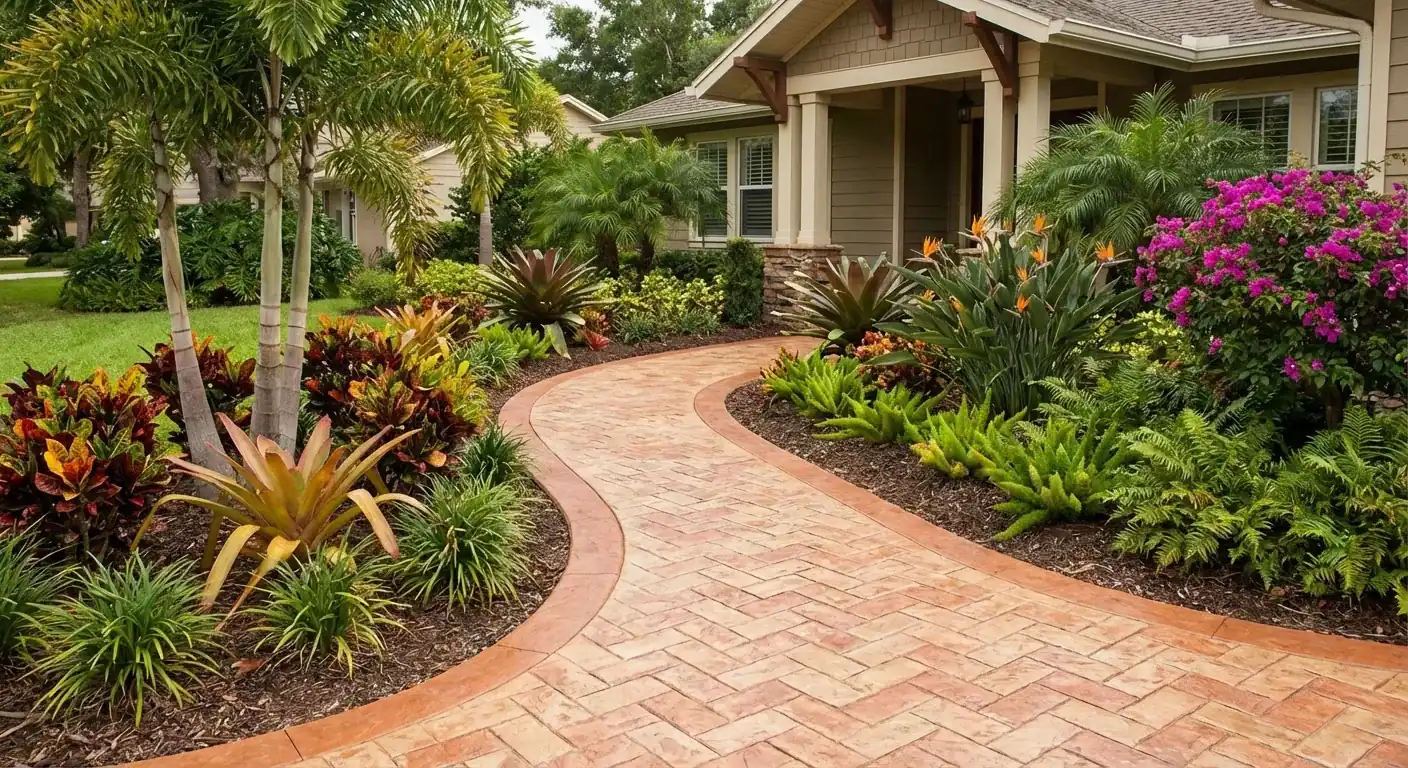
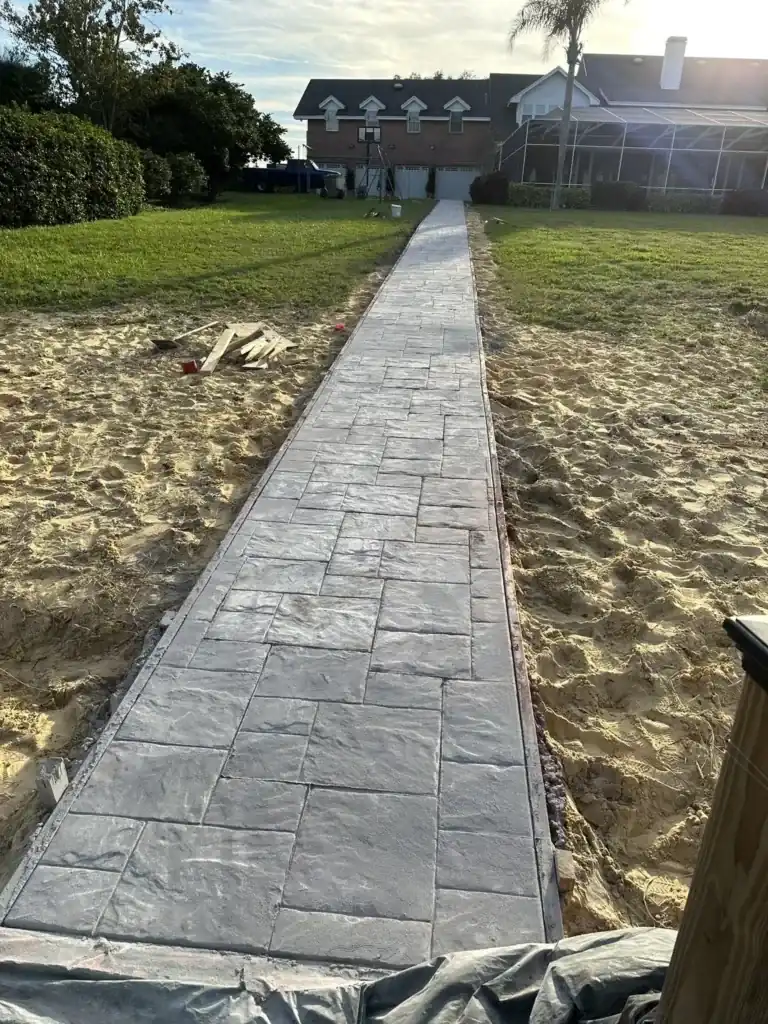
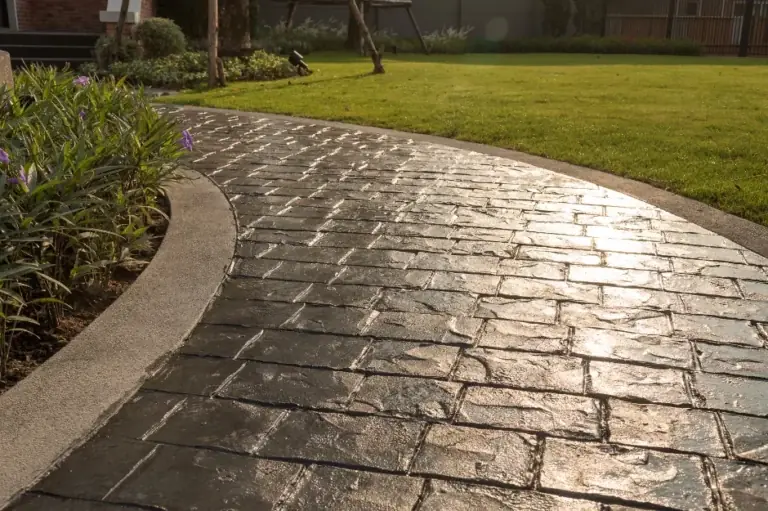
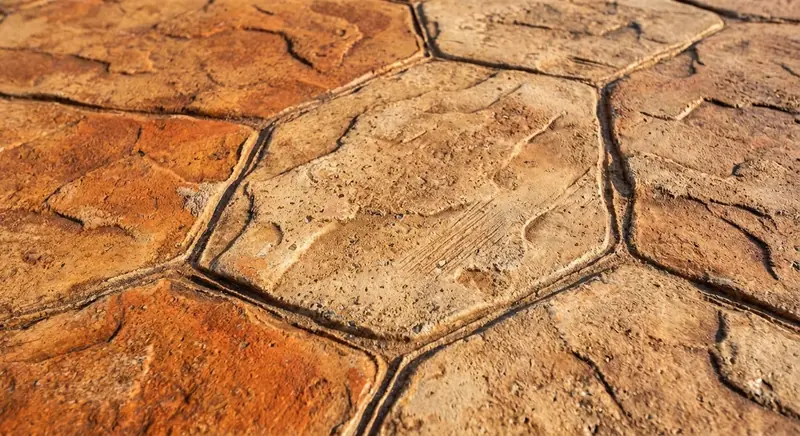
The mechanical difference is simple. Pavers are individual units laid over a bed of sand, with sand swept into the joints between them. The poured option is one slab with a pattern pressed into the surface while it is wet, then colored and sealed. We pour the stamped side, so after we see the site we can write you a stamped quote. It runs $12 to $22 per sq ft, and our stamped concrete page describes the process. On the units themselves, an installer's written quote is the authority. Use this page to know what to ask.
Stamped concrete vs pavers in Spring Hill, side by side
| Question | Stamped concrete | Pavers |
|---|---|---|
| How it is built | One slab poured over a compacted base, pattern pressed in while wet | Units set on a sand bed, joints filled with sand |
| When the ground moves | The slab can crack where it is unsupported | Individual units can dip or lift |
| Joints | Control joints cut at planned spacing | A joint around every unit |
| Repairs | Patch and recolor; a patch will not match the old color exactly | Lift out and reset the affected units |
| Upkeep | Clean and reseal every 2 to 3 years on average | Keep the joints topped up and clear of growth |
| Hernando County right-of-way | Concrete apron is a county-standard option | Not allowed unless the County Engineer approves |
| Hernando building permit | Flatwork rules apply | Non-structural sand-set pavers are on the county exemption list |
| Our price | $12 to $22 per sq ft, free written estimate | Get a written paver quote with the same line items |
No single row settles the choice. The sections below take up the rows that matter on Hernando and Pasco ground.
Sand under both: what Candler fine sand asks of the base
USDA's soil survey puts Candler fine sand as the most extensive soil in Hernando County, covering about 90,195 of roughly 320,600 acres, or about 28 percent. USDA classes it as excessively drained. Sand drains water quickly, which sounds like good news for any surface. The catch is that sand doesn't hold a shape. A base that wasn't compacted evenly lets the surface above it settle, whether that surface is a slab or a field of units.
So both options start with the same question: what's under the surface? A good base is cleared of roots, stumps and debris, filled with clean material and compacted before anything goes on it. The Florida Geological Survey lists decomposing stumps, improperly compacted soil after excavation and buried debris among the causes of settling that looks like a sinkhole. The Survey also says no part of Florida is technically free of sinkhole risk, and USGS places Hernando and Pasco in its west-central Florida karst study area. Neither favors one surface. Both are reasons to ask any contractor how the base is prepared.
Settling looks different on each. A slab with a soft spot under it can crack and step. Set units over the same soft spot show a dip you can see, and lifting them and rebuilding the bed can fix it.