Concrete repair in Spring Hill: patch it, coat it or pour it new
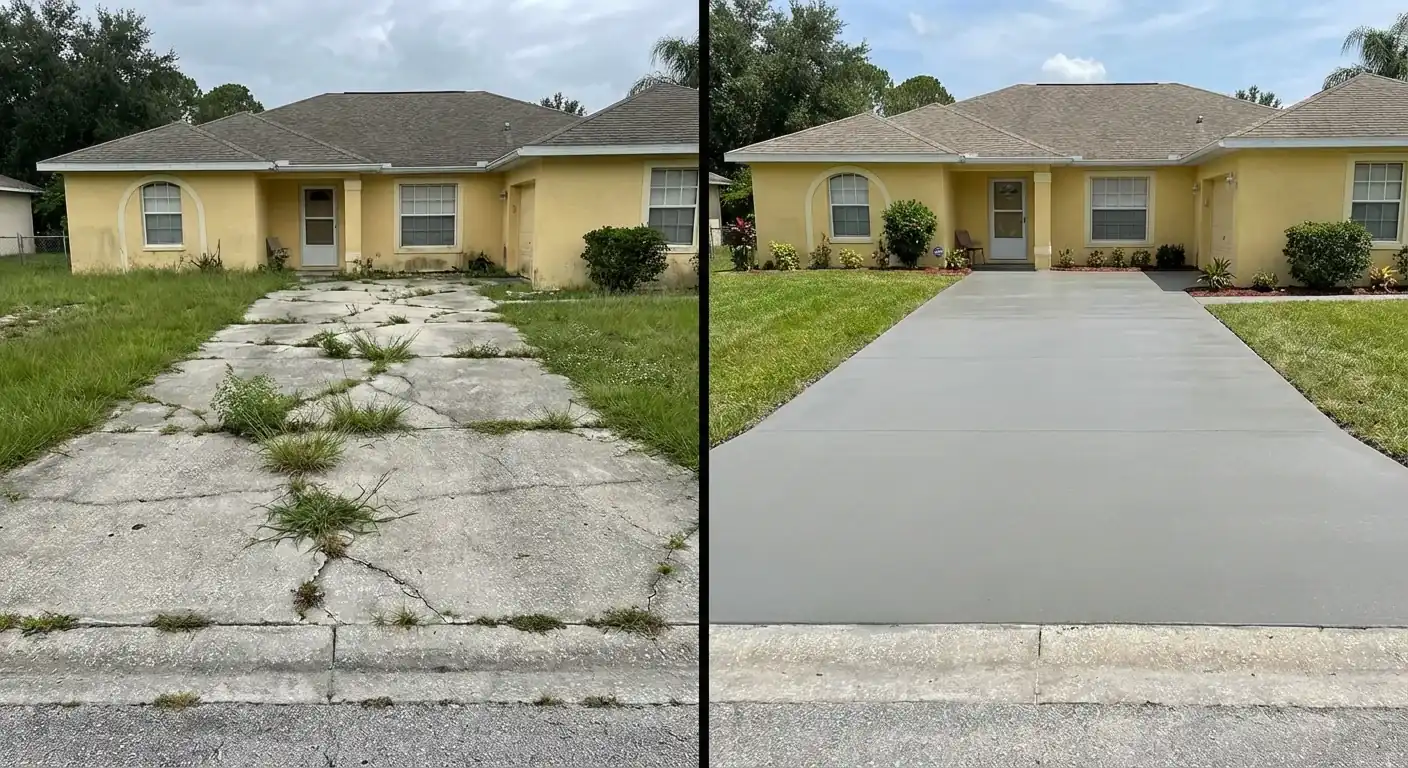
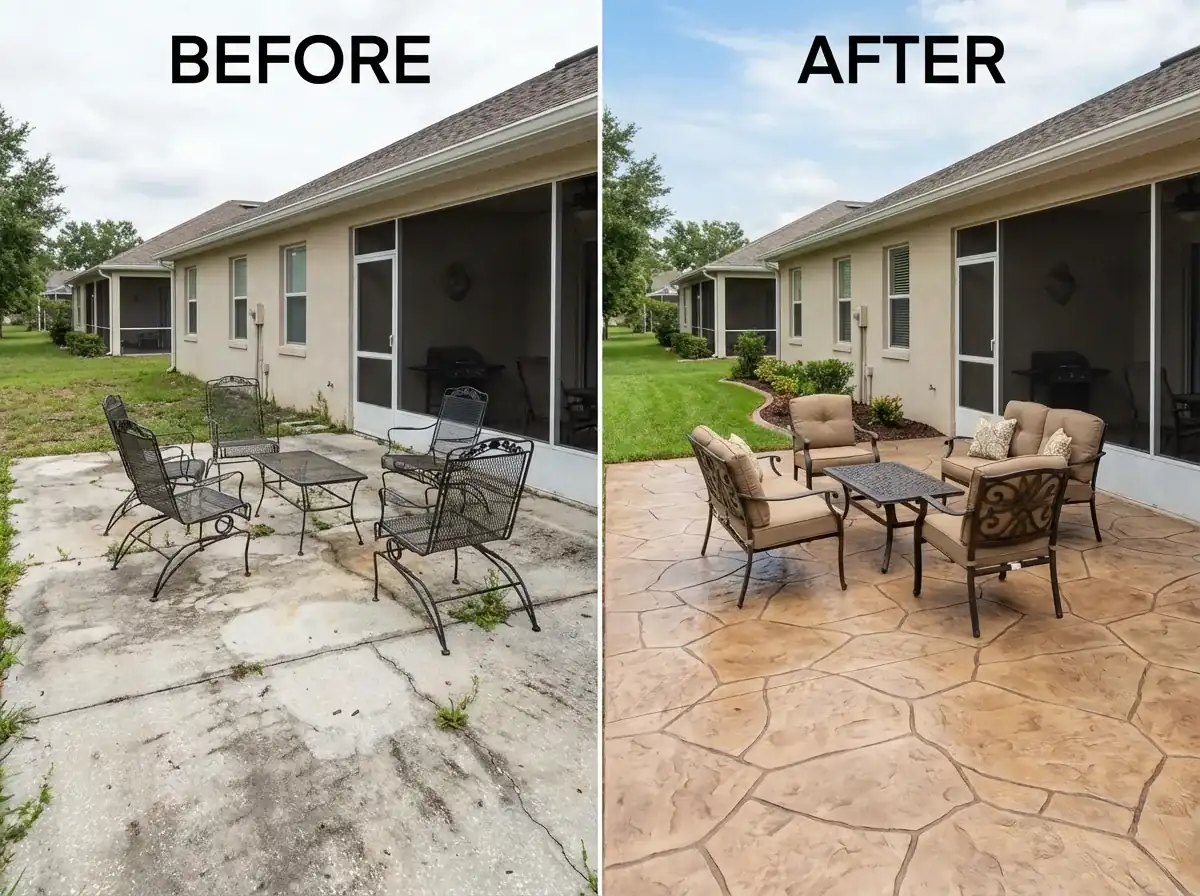
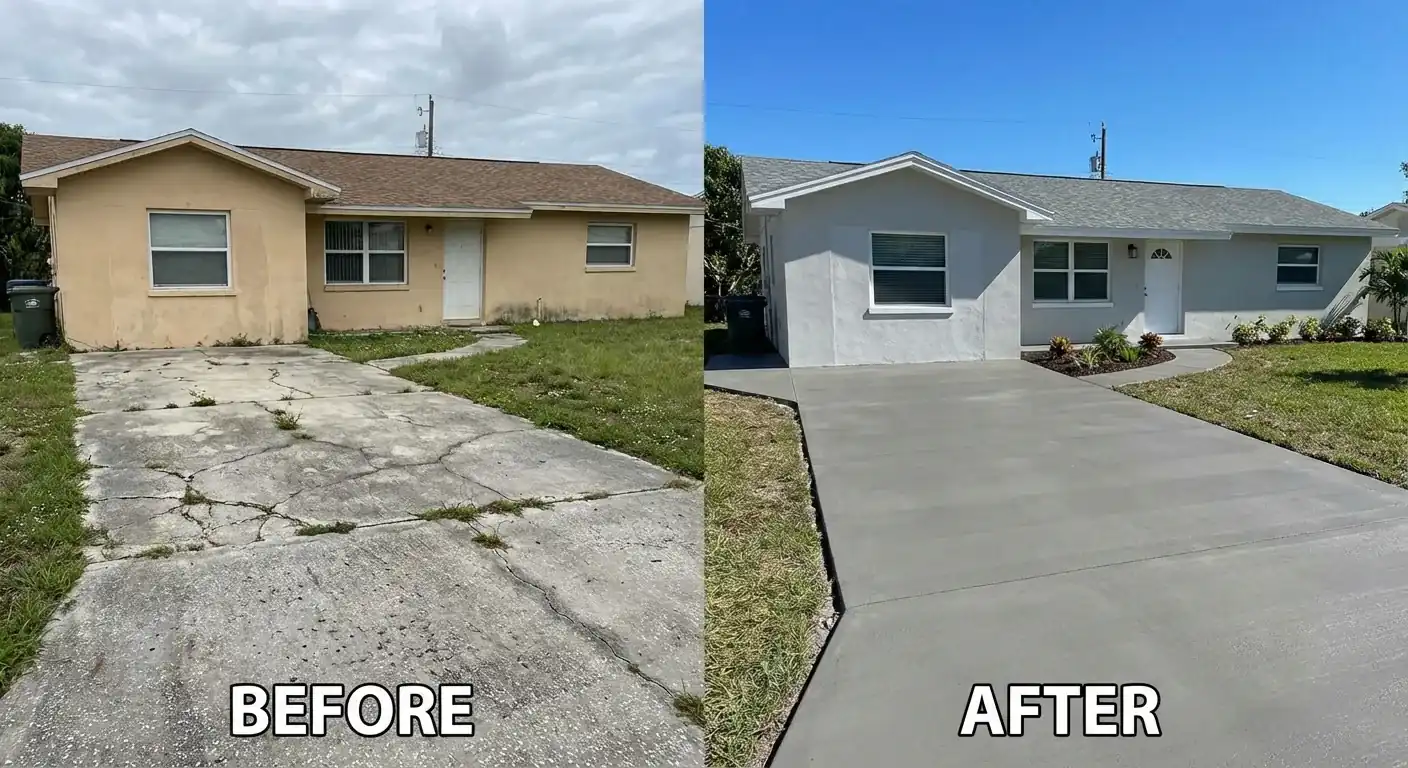
A damaged slab gets sorted three ways. Repair means the concrete underneath is sound and you're fixing a flaw, like a filled crack, a rebuilt chipped edge or a low corner brought back up. Resurfacing is for a slab that's sound but tired, so a thin new wearing layer goes over it. Replacement is for a slab that has failed as a structure, because anything laid on top would fail with it.
What decides it is whether the slab is still moving. A stable slab with ugly cracks is a good candidate for concrete repair in Spring Hill. One that keeps dropping, tilting or heaving will tear through a patch or an overlay, and you'll have paid twice. We say so at the visit, even when the honest answer is a new pour at the driveway or patio prices on those pages. The sections below show how we tell the difference.
Reading the crack before choosing the fix
Shallow, roughly parallel cracks about 1 to 3 feet apart that appear early in a slab's life are plastic shrinkage cracking. The National Ready Mixed Concrete Association ties them to wind over 5 mph, low humidity and hot concrete during the pour (CIP 5). They're a surface problem, so this kind of concrete repair in Spring Hill is a fill or a thin coat.
A second kind runs across the middle of a panel where a joint should have been. Trade guidance puts control joints in a 4 inch driveway no more than 10 feet apart and about 1 inch deep, so the slab cracks where the finisher chose. Old pours with no joints, or joints cut late, crack wherever they like. If a crack like that has stayed tight, it responds well to concrete repair.
The cracks that worry us have a step, with one side higher than the other. Others widen from one end to the other, or reopen after being filled. Those say the ground moved. Lay a tape or a coin beside the crack, take a photo, and check it again in a month. A crack with a step in it is the one we most want to see in person.
Settled slabs in Spring Hill: sand, voids and look-alikes
Across Hernando County the most extensive soil in the USDA survey is Candler fine sand, which USDA classes as excessively drained deep sand. Water moves through it fast, which helps drainage. It is also why, when a slab corner has dropped, we trace where the roof and irrigation water lands before we talk about a fix.
Then comes the big question: is it a sinkhole? The Florida Geological Survey says no area of Florida is technically free of sinkhole risk, and Hernando County Property Appraiser records flag about 1 in 8 Spring Hill parcels, either unrepaired or with a completed stabilization permit. The Geological Survey also lists look-alikes that settle a slab without any sinkhole: clay or organic layers that compress, rotting stumps, broken sewer, drain or septic lines, soil that was never compacted after digging, and buried debris.
A crew doing concrete repair in Spring Hill can't settle a sinkhole question, and we don't diagnose one. What we can do is look for the cheap culprits: roof water dumping at a slab edge, a stump line, a drain run. If the ground looks like it is actively opening, we tell you to stop and call a qualified professional. The Survey notes insurance may pay for testing, but may not cover settling from other causes, so ask your insurer before work starts.