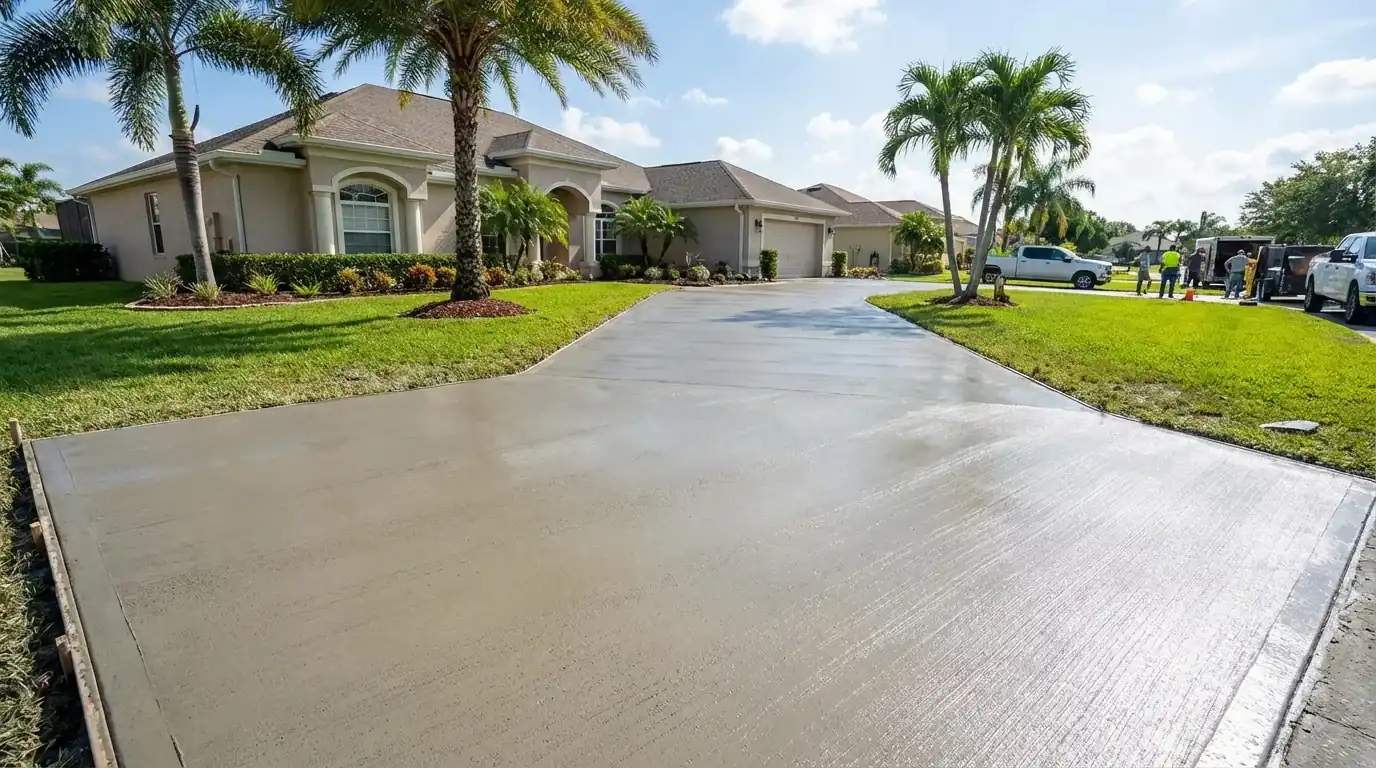
A 1979 driveway at the US-19 and SR-52 crossroads
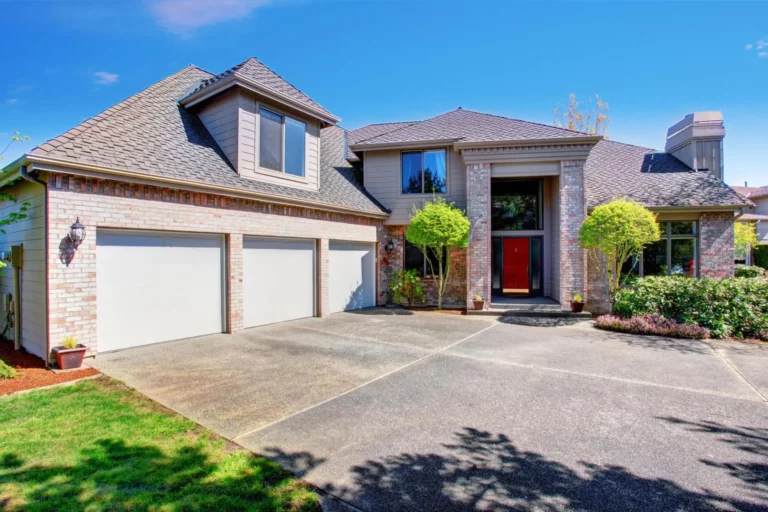
Bayonet Point had 26,713 people at the 2020 Census, the most of the six Pasco communities we checked for this site. The median home was built in 1979, so half the houses here are more than 45 years old. If yours is the original slab, it's had a long run.
This page covers driveways only. Patios, slabs and walks are on our Bayonet Point concrete contractors page. How we build a driveway, from thickness and steel to joints and finish, is on the main concrete driveway contractors page.
Start with tear-out or new. A crack that has lifted one side of a joint, a surface pulling away from the garage apron, or a dip where water ponds means replace it. A slab that's only stained, faded or lightly scaled is a different job, and our concrete repair and resurfacing page covers when a resurface is the better call.
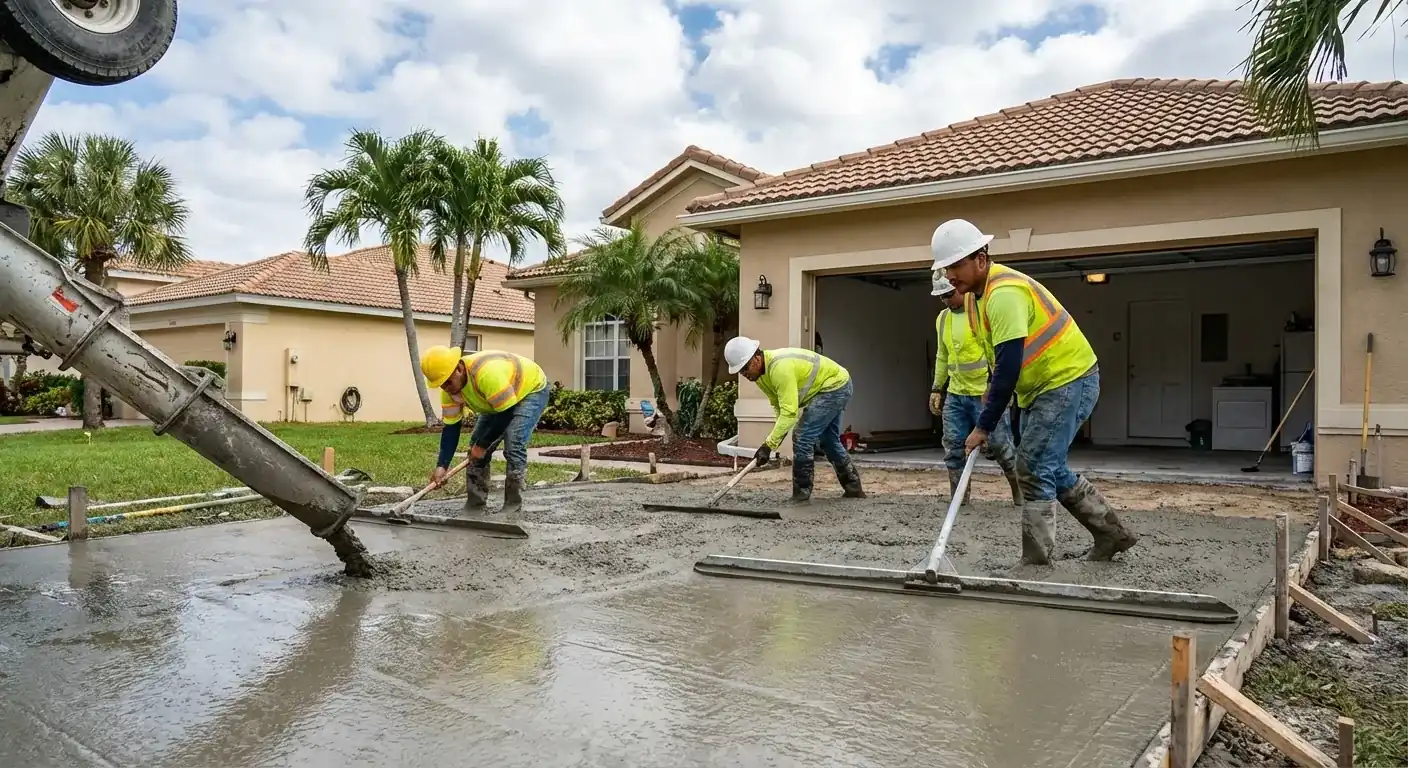
Where 500 square feet lands on a typical two-car pour
Pasco County Building Construction Services keeps a list of work that needs no building permit, and one line on the current sheet reads "Non-Structural concrete flatwork, under 500 square feet (per parcel), NOT to be built on." Do the math on yours. A 20 by 24 foot driveway is 480 sq ft, under the line. A 24 by 26 foot one is 624 sq ft, over it, and a boat-trailer pad or a widened turnaround pushes past 700.
The county counts per parcel, so the walk and any side pad go into the same 500. The sentence also says the flatwork must not be built on. A slab meant to carry a carport or a future room is a different permit with sealed plans. Go over the line and that exemption no longer covers you, so plan on the county permit and its $45 base fee unless Pasco tells you in writing your job needs none. The Hernando and Pasco concrete permit guide lays out both counties side by side if you have a second property across the line.